
Giant sequoia trees are the giants of the plant kingdom, growing to large dimensions, both in height and volume. They are also very long-lived. It is the only living member of its genera.
 Mark Matzeldelaflor
Northern Saw-Whet Owl

Northern saw-whet owls are small birds found in North America. They are the smallest owl found in the east of the continent. They are successful hunters at night but spend the day being rather inconspicuous. Their broad range of distribution ensures its population’s security for some time to come.
Wood Thrush

The wood thrush is medium-sized bird native to North America. It is a close relative of the American Robin and the other thrushes.
Italian Cypress (Mediterranean Cypress)

Italian cypress is a medium-sized conifer found across the Mediterranean region. It has also been grown in colder places like North America, New Zealand, and the British Isles.
Eastern White Pine

Eastern White Pine is a tree native to eastern North America. It is a large pine tree with historical significance as the Iroquois (Native American Haudenosaunee) considered it as the “Tree of Peace” and chose it as a symbol for the unity of the Iroquois Confederacy.

Coulter Pine

The Coulter pine is an evergreen coniferous tree native to coastal mountains of southern California and northern Baja California. Named after an Irish botanist and physician Thomas Coulter, this species is also found nearby Diamond Mines Regional Preserve located in the north of Mount Diablo State Park. Jeffery pine tree is closely related with Coulter pine and they commonly share their habitat with Ponderosa pine.
White Spruce

The white spruce tree, also known as cat spruce and skunk spruce, is a coniferous tree found across North America.
Alaskan Wood Frog

The Alaskan wood frog is one of the most widely distributed amphibians in North America, especially in Alaska, the colder parts of Canada, and the contagious United States.
Northern Spotted Owl

The Northern Spotted Owl, one of the three subspecies of spotted owls, is a western North American bird with a barred tail and spotted head.
Western Hemlock

Known for its durable timber, the western hemlock is a species of large conifers found in the western coastal regions of North America. It is the dominant climax species in the forests west of the Pacific Coast Ranges.
Mexican Spotted Owl

Mexican spotted owl is a subspecies of spotted owl occurring in the United States and Mexico. Although the smallest among the spotted owls, it is one of the largest owls found in North America.
Sugar Pine

Standing tall in the mountains, the Sugar Pine is a true giant of the forest. With towering heights that surpass many other pines, its massive, glistening cones stretch up to 20 inches long, making it a spectacle of nature. Often called the ‘king of the pines,’ this majestic tree offers more than just awe-inspiring beauty; it plays a critical role in the ecosystem and human industry alike.
Alpine Ibex

Alpine ibex is a wild goat that inhabits the European Alps, occurring at an elevation of 5,900 to 10,800 ft. Although the herbivorous species was extirpated from most of its historical range, it was successfully reintroduced to those regions. All living individuals today are descendants of the stock from Gran Paradiso National Park in Italy and Maurienne valley in France.
Rough-Skinned Newt

The rough-skinned newt is a small salamander found in North America, well known for its powerful poison.
Tundra Wolf

Tundra wolf is one of the largest among the subspecies of gray wolves occurring in Eurasia from Finland to Kamchatka Peninsula. Although the carnivorous subspecies is under threat, it is still hunted for its fur.
Pacific Yew

The Pacific Yew is an evergreen coniferous tree which comes in small to medium sizes appearing somewhat like a large shrub. It is a native North American tree mainly found in moist, shady regions, and in the underlying layers of vegetation in dense forests.
Deer Mouse
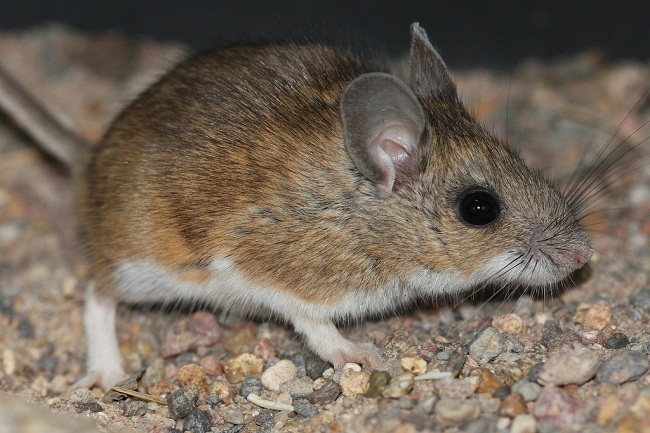
Deer mice are small, white footed rodents that are quite prevalent in North America. Although deer mouse is the common name given to Peromyscusmaniculatus, most species belonging to the genus Peromyscus are generally referred to as the deer mouse. These tiny mammals are a concern since they are the carriers of Lyme disease and Hantavirus, which are deadly to humans.
Deodar Cedar

Deodar cedar, sometimes referred to as the California Christmas tree, is a speciesof conifer occurring in the western Himalayas at an altitude of around 1,500 to 3,200 m.The tree is graceful with pendulous branches and comes in attractive coloring, ideally suited for use in landscaping.
Red Pine (Norway Pine): Majestic Tree with Strong Wood & Ecological Importance

Towering high in North America’s northern forests, the Norway Pine, also known as Red Pine, commands attention with its straight trunk and vibrant red bark. Standing as a symbol of endurance, this tree offers not only striking beauty but also essential environmental benefits, making it a vital part of its ecosystem and an invaluable resource for human industry.
Ringneck Snake

The ringneck snake is a species of slender, mildly poisonous snakes commonly found in southeastern Canada, central Mexico, and many parts of the US. Their small stature, nonaggressive nature, and rear-facing fangs do not pose much threat to the humans. Females are comparatively larger while having shorter tails than the males.
Japanese Cedar

The Japanese cedar or cryptomeria, meaning hidden parts, is a coniferous tree widespread within Japan. It is a handsome tree and only grows prettier with age, with the most striking feature being its pyramidal shape with dense branches, spreading in concentric circles. There are various dwarf cultivars that enhance the aesthetics of the tree even further, and they are used extensively in bonsai.
Siberian Chipmunk

Siberian chipmunk is a species of rodents native to northern Asia. The omnivorous species was introduced in Europe as pets in the 1960s, and now it is available in many European countries.
Ponderosa Pine

Ponderosa pine is a species of lean and erect coniferous trees distributed in the western US and Canada. It is one of the most abundant conifer species in America and is valued for its rugged-looking and resilient timber as well as for recreational use.
Pine Marten

The pine marten is a slim, agile animal native to the deciduous and coniferous forests across Central and Northern Europe as well as some parts of Asia. This elusive creature is characterized by a soft, silky fur and long, bushy tail, with the males slightly larger as compared to the female pine martens.
Dall Sheep

Dall sheep, named after the American naturalist Mr. William Healey Dall, is an ungulate found in the Northwest of North America. The most striking feature is the massive curly horns in the males that add to its ornamentation. Females, on the other hand, have inconspicuous horns. The age rings on the horns, also known as annuli, are used in aging an individual.
Scots Pine

Scots pines are one of the most extensively distributed conifers in the world, found in large parts of Eurasia. They grow from sea level to a height of 2400 m, the elevation increasing from north to south of its native range.
Northern White Cedar

Northern white cedar also called swamp cedar is an evergreen species of conifers found in eastern Canada and many places in the United States. Since its barks, twigs, and sap are believed to have medicinal properties, it is named “arborvitae” in Latin, meaning “tree of life.” Although northern white cedar is closely related to western red cedar, the two species differ in their geographic range, minutely pointed scales of seed cones, and leaf color.
Siberian Musk Deer

The Siberian musk deer is a species of small, stocky musk deer living in the forested mountainous regions of Northeast Asia. With a kangaroo-like face, long, muscular hind legs, shorter and weaker forelimbs, small chest, highly arched back, and large rear, these animals move in a sequence of coordinated jumps. Unlike other deer species, the male Siberian musk deer do not have antlers but grow fangs during the breeding season.
Austrian Pine

The Austrian Pine also called the black pine is one of the toughest pine species widely spread across southern and eastern Mediterranean Europe as well as the mountainous regions of North Africa. These pine trees have gained prominence in the Midwestern US states due to their adaptability, bold texture, and fullness of foliage.
Red Crossbill: Fascinating Finch Species with Unique Bill Shapes

Imagine standing in the heart of a dense forest, the sharp scent of pine and spruce filling the air. In the stillness, a faint chipping sound emerges—an unmistakable call that pulls your eyes upward. There, perched effortlessly on a tree branch, is the red crossbill. With its bill twisted into an almost impossibly perfect cross, this finch holds the secret to surviving in one of nature’s most unforgiving environments. But what’s behind that sharp beak? It’s more than just a quirky feature; it’s a finely-tuned tool for cracking open the tightest, toughest cones. The red crossbill isn’t just a bird—it’s a living testament to nature’s remarkable capacity for adaptation.
Rubber Boa

The rubber boa snake could not have been given a more appropriate name as its loose and wrinkly skin does give the feeling that it is made of rubber. One of the earliest of the boa species, even older than the much larger boa constrictor, this small reptile is found widely across North America.
Pinyon Pine

Pinyon or Piñon is a species of small to medium-sized pine trees growing at an altitude of 1,400-3,000 m. As a drought-resistant tree, the Pinyon intermixes with junipers and dominates the forests of the semi-desert regions in the southwestern US.
Pine Beetle

The pine beetle is a member of the subfamily of bark beetles infesting the trees in North American forests. The aggressive tree-killing insects live primarily in pine trees of all vigor quality and ages. Group killing may occur in dense, pure, and even-aged pine stands or among clusters of pine in mixed-conifer stands. An epidemic may cause depletion of timber supplies and increase the danger of forest fire.

Eurasian Wolf

The Eurasian wolf, as the name suggests, is a canid subspecies found across Europe and Asia. It is a carnivore that has largely had its population cut down during various periods of history, but currently, conservation efforts have ensured that it thrives across the range that it inhabits. Its numbers are believed to be generally stable.
Alaskan Moose

The largest extant subspecies of the deer family along with the Chukotka moose, the Alaska moose inhabits most of Northwestern North America. While the males have antlers, like many other deer species, they lose their antlers around December & January, and regain them during the spring.
Olive-Sided Flycatcher

Olive-sided flycatcher is a medium to large-sized passerine bird belonging to the tyrant flycatcher family. It is sturdily-built and is one of the most noticeable birds of the coniferous forests of North America.
Subalpine Fir

The Subalpine fir tree is the most widely distributed fir species in North America after the balsam fir. It is also the smallest of the true firs inhabiting the western United States.
Bald Cypress

Bald cypress, also known as swamp cypress, or southern-cypress is a large-sized coniferous tree found in the Gulf Coastal Plains and the Southeastern United States. It has a pyramid-shaped crown when young, turning columnar at maturity. Trees growing in swampy conditions are known for their pneumatophores, commonly called “cypress knees,” which are special types of aerial roots used for transporting oxygen to the underground root system.
Yellow-bellied Flycatcher

The Yellow-bellied Flycatcher is a species of small passerines of the tyrant flycatcher family. Its broad range of distribution makes its population relatively invulnerable for some time to come.
Mountain Beaver

Mountain beaver is a species of primitive rodents found in western North America. This stocky burrowing animal is not a true beaver, but was so named because it severs branches and gnaws barks of trees in a way akin to beavers. Characterized by small eyes and ears, rudimentary tail, and curved front claws, the mountain beaver bears resemblance with tailless muskrats and large hamsters.
Roe Deer

Roe deer or Western roe deer is a species of small deer distributed in many places of Europe and Asia. As compared to the female roe deer, males are larger having short and erect antlers with 2 or 3 points. During October-January, the old antlers are shed and replaced by new ones that are covered with vascular ‘velvet’ skin, which supply blood to facilitate the growth.
Nordmann Fir

The Nordmann fir, named after the Finnish zoologist Alexander von Nordmann, is a large coniferous tree found in certain Caucasian countries. Scientists have observed two distinct subspecies of the tree – the Caucasian fir and the Turkish fir, with their range of distribution culminating in Northern Turkey at about 36°E longitude.
Montezuma Cypress

The Montezuma cypress is a deciduous, coniferous tree found from Central America to the Southern parts of North America where it generally grows next to water bodies. Known to develop huge trunks, the Montezuma cypress is a fairly hardy plant not affected by common diseases. It’s a remarkable tree with both ecological importance and deep cultural ties.
Balsam Fir

Balsam fir is a species of small to medium-sized North American coniferous trees with a dense, symmetrical pyramidal crown. Known for its spicy fragrance and dark green color, the balsam fir has been commonly used as a Christmas tree over the years.
Pine Warbler

An aptly named bird, the pine warbler is a member of the New World warbler family. With its numbers in a constant upswing, one would expect to spot one with relative ease; sadly though, the bird spends most of its time in pine branches at great heights, often obscured by pine cones and needles.
Mountain Hare

The mountain hare is one of the most widely distributed of the hare species. It is also one of the largest, second only to the European hare. It is highly adapted for the snowy mountainous regions that it inhabits.
California Red-Sided Garter Snake

The California red-sided garter snake or red-sided garter is a subspecies of common garter snakes found in North America. These colorful, medium-sized snakes are considered harmless since their mild neurotoxic venom is not deadly to humans. Despite having enlarged teeth, the garter snakes lack an efficient means of delivering venom since their gums are comparatively larger.
Shortleaf Pine

The Shortleaf Pine is a medium- to large-sized tree, indigenous to the eastern United States. It’s a unique and ecologically important tree species found primarily in the southeastern and central United States. The tree varies in form – sometimes straight, sometimes twisted with an asymmetrical crown. It can tolerate varied soil and site conditions and maintains steady growth rate for a long period.
Common Loon

Common Loons, formerly known as Great Northern Loons, are migratory aquatic birds with sharp beaks and thick necks.
Big Brown Bat

Big brown bats are the largest and most common among other bats found in the United States. Although males and females are similar in appearance, females are a bit larger than males. It derives its name because of its large size – almost more than double the size of little brown bats.
American Black Bear

The American black bear is a species of medium-sized bears found in North America. Since its population has grown over the last two decades, it has become the most familiar and widely distributed of all the bear species in America. Despite their name, black bears exhibit variation in coloration. It is believed that this variability is related to the diversity of their habitat, as bears with lighter colors are found in open habitats.
Virginia Pine

Once known as a ‘forest weed,’ the Virginia pine tree has come a long way, gaining a reputation as a Christmas tree, despite its sharp needles. Its tendency to grow in poor soils and apparent capability to grow in places, where most other pines won’t, have made it one of the most favored trees in North America.
Japanese Yew

The Japanese yew is a highly sought after ornamental shrub native to Japan, Korea, and some other countries in the region. It is very tolerant to pruning and is ideal for use as a hedge, backdrop for a garden, and in its native regions, particularly Japan as a bonsai tree.
Canada Lynx (Canadian Lynx): Elusive Predator with Critical Habitat and Competitive Advantage

In the snowy landscapes of the North, the Canada Lynx blends effortlessly into its surroundings. Imagine walking through the snow-covered forests of the North, where the silence is only broken by the faint rustle of leaves. Suddenly, a shadow moves. It’s the Canadian Lynx, gliding through the snow with the grace of a ghost, its tufted ears and keen eyes scanning the landscape. For centuries, this elusive predator has been a symbol of the wilderness, both mysterious and powerful, relying on its stealth and sharp hunting instincts to thrive in harsh, frozen landscapes.
Spruce Grouse

The spruce grouse is a sturdy bird with dark plumage found in the coniferous forests of North America. It resembles a large chicken in its appearance and is nicknamed ‘fool’s hen’.
Pine Grosbeak
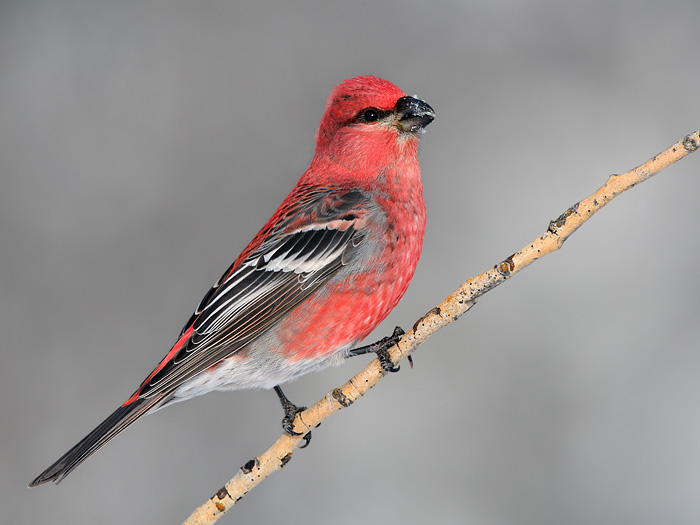
Pine grosbeaks are the larger members of the finch family found in the boreal forests. Sexual dimorphism is present among males and females. They are stocky, plump and heavy-chested with strong, short, and cone-shaped bills. The nine recognized subspecies of pine grosbeak vary in body size, bill shape and size, as well as in leg, tail and wing lengths.
North American Porcupine

The North American porcupine is the second largest rodent species found in North America. It is an herbivorous animal with pines, or quills, as they are called, all across their body, except the face, underbelly and limbs.
Korean Fir

The Korean fir tree is a small to mid-sized evergreen conifer, found in the mountains of South Korea. It is a beautiful plant with ornamental foliage, revered across the world as a decorative tree for gardens and landscapes.