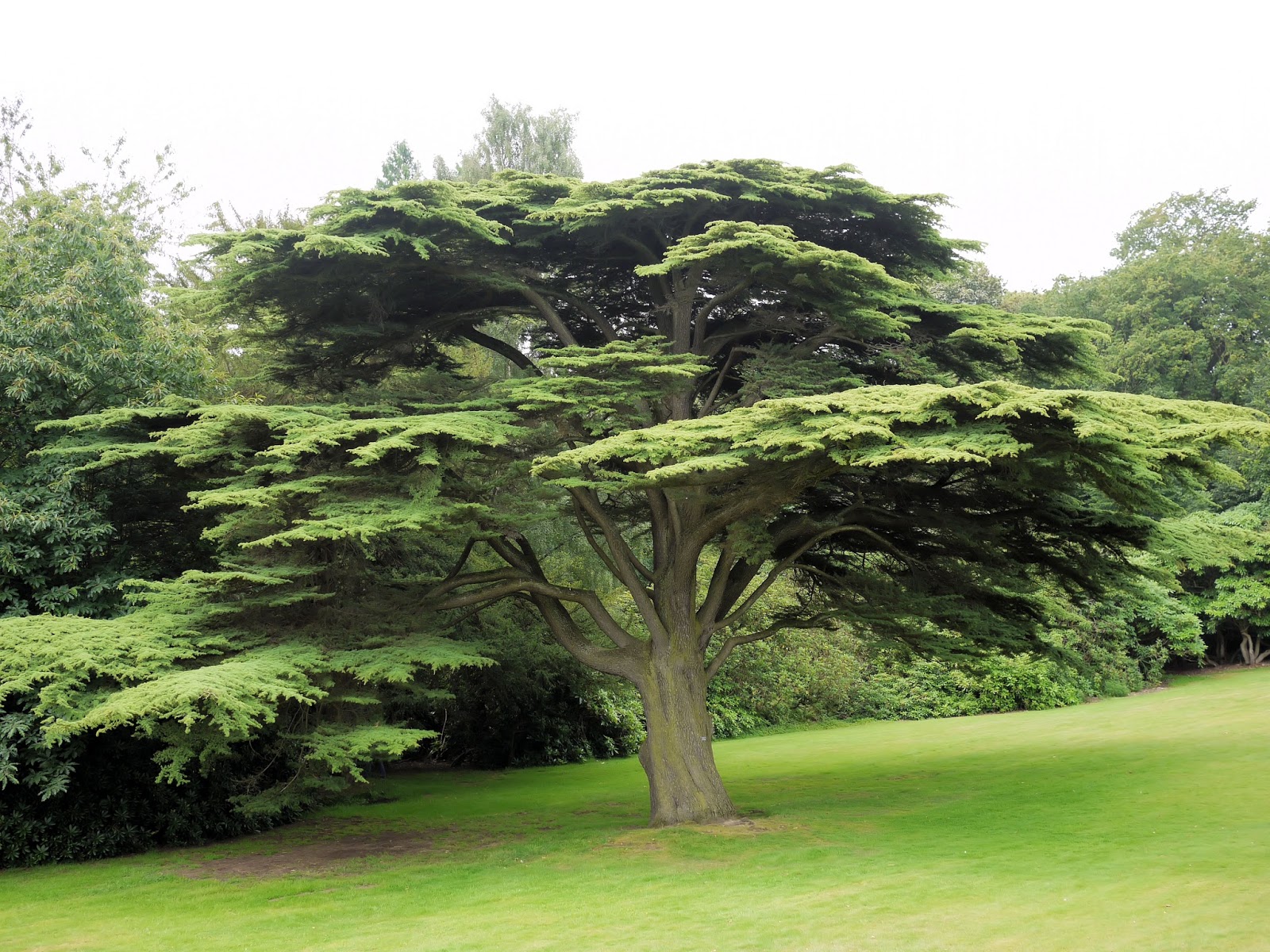
The cedar of Lebanon, also known as Lebanon cedar, is a species of tall coniferous trees characterized by large, irregularly shaped heads with spreading branches. It belongs to the Cedrus genus of the Pinaceae family. This cedar species typically grows in the mountainous regions of the Eastern Mediterranean. In Middle Eastern culture, it has great historical and religious significance and has been cited several times in ancient literature.
 Mark Matzeldelaflor
Eastern Red Cedar

Eastern red cedar, commonly called the red cedar, eastern juniper, pencil cedar, and red juniper, is a species of dense, slow-growing conifers that belong to the genus Juniperus of the family Cupressaceae. Known for its graceful appearance and being incredibly strong for its small to medium size, the red cedar is found in the eastern and northern states of America. The two varieties of eastern red cedar include Juniperus virginiana var. virginiana or eastern juniper (distinguished by larger cones, acute scale leaves at the apex, and reddish brown bark) and Juniperus virginiana var. silicicola or southern juniper (characterized by smaller cones, blunt scale leaves at the apex, and orange-brown bark).
Black-backed Woodpecker

The North American woodpecker is a sexually dimorphic species. Primarily foraging on burnt-forests, the woodpecker prefers open woodlands for nesting and thriving.
Eastern Gray Squirrel

In the cool, quiet corners of coniferous forests, the Eastern Gray Squirrel darts from tree to tree with remarkable agility. With its fluffy tail and quick reflexes, this small yet adaptable mammal thrives in urban parks and dense woodlands. Despite its widespread presence, the Eastern Gray Squirrel has mastered the art of survival through clever food-hoarding, strategic nest-building, and distinctive vocalizations.
Bohemian Waxwing

The bohemian waxwing is a passerine bird. Due to its waxy feather and wandering nature, the bird has been named as such.
Norway Spruce

The Norway spruce is a beautiful ornamental tree species. The pyramid-shape makes it as a viable choice for Christmas trees. It is also a popular selection for bonsai.
Douglas Squirrel

The loud squirrel is an attentive and agile species. They have cute tuft around the ears during the winter.
Northern Goshawk

The raptor bird, being a large predator, is known for its size. The male goshawk is smaller than the female.
Bighorn Sheep

The bighorn sheep, covered with wools, is known for its signature horns. The sturdy and strong horns are curled and twisted.
Eastern Milk Snake

The eastern milk snake is a non-venomous subspecies of milksnake. The calm snake is a popular name in the pet trade.

California Redwood

The California redwood is known for its longevity and height. Just like its name, the tree is although not exclusive to the place, but mostly found in that region.
Western Terrestrial Garter Snake

The medium-sized snake is basically terrestrial, but at times it becomes semi-aquatic. This is a North American snake that is venomous, but that is not detrimental for people. The venom can immobilize small preys only, that helps the snake swallow them. Unless extremely threatened, the snake doesn’t bite humans.
Foxtail Pine

The foxtail pine, found in the Kings Canyon National Parks and Sequoia National Park along with the subalpine zones, is a tree with great longevity. This is not a commercial plant and are not harvested commonly.
Snow Goose

The migratory bird is known for its snow-like color that gets it’s the name. There are usually two color morphs of the species and the birds belonging to different morphs often crossbreed with each other. The otherwise carnivorous bird sometimes consumes larvae of flies during its initial days post-hatching.
Snowshoe Hare

Found in the Alpine region, the snowshoe hare is an interesting animal as it changes color according to the season. Either stays in groups or alone, the hare populates rapidly.
Ruffed Grouse

The non-migratory bird has a beautiful look, due to its colorations and patterns on the body. It is widely hunted and that is a tradition at some parts of the world.
Sable: Stealthy Forest Predator with Unique Hunting Skills

Deep in the shadowy forests, a figure moves through the underbrush with ghostly silence. The Sable—sleek, elusive, and fiercely intelligent—glides through its environment, its sharp senses and stealthy movements making it one of the forest’s most skilled predators. With a blend of power, precision, and agility, the Sable remains a mystery to many, embodying the raw beauty and intensity of nature’s quieter moments.
White-winged Crossbill

The white-winged crossbill belongs to the finch family. Usually, it is smaller than some of its cousins, and the juvenile bird is more similar to other adult crossbills.
Short-eared Owl

The short-eared owl, colloquially the small or little eared owl, has earned its name due to its tuffet of feathers resembling two short ears. The dimorphic species has a round and large head. It is different than the long-eared owl which has long ear-like feathers.
Blue Spruce

The blue spruce is an extremely resilient species that can withstand massive temperature changes, air pollution, and draught. They belong to the pine family.
Western White Pine

The western white pine is an ornamental species of tree that is blessed with an incredible endurance capacity. The beautiful coniferous tree has an open crown.
Spotted Owl

The medium-sized spotted owl is known for its appearance and hence the name. The species is facing habitat loss to a mentionable extent due to deforestation.
Snow Bunting

The snow bunting, as the name suggests, is a winter bird. The migratory bird has crossed with other species like Lapland bunting.
Tibetan Wolf

The Tibetan wolf is one of the 38 subspecies of gray wolf and is often considered to be the same as the

Cassin’s Finch

The Cassin’s finch, a North American bird is named after the curator of Philadelphia Academy of Natural Sciences, Mr. John Cassin. The species is often found at higher altitudes.
Harlequin Duck
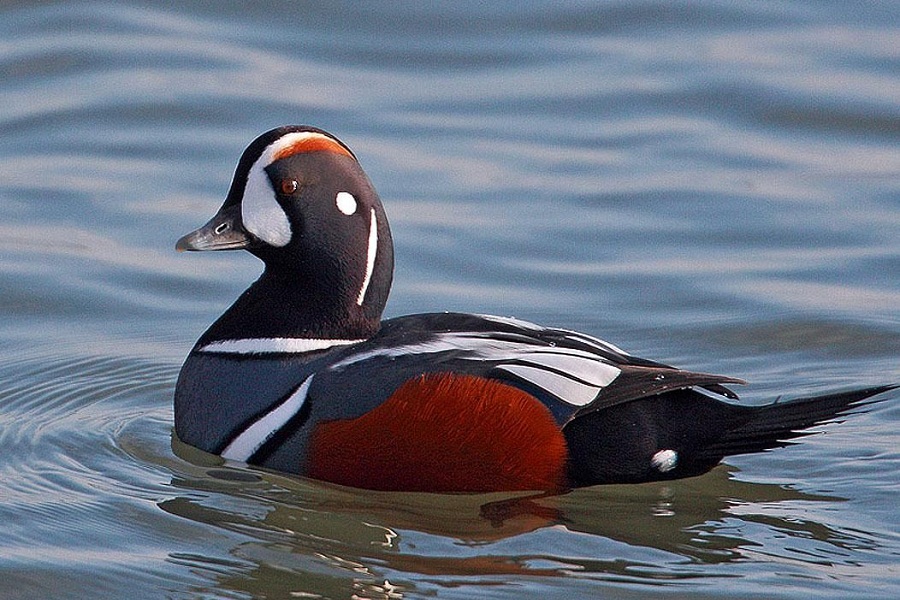
The Harlequin duck is one of the most beautiful sea ducks of the world, due to its robust coloration. Females are always paler than males.
Purple Finch

Purple finches are north American medium-sized birds and mostly confused with house finches. Earlier the species was grouped with rose finches but now there are clear differences in regards to their family.
Brush Rabbit

Brush rabbits are North American species and they are solitary by nature. Because of their agility and apparent timid behavior the species is a prominent name in the pet trade.
American Mink

American minks are carnivore animals, equally active at both land and water. They are farmed to a mentionable extent because of their glossy fur.

European Larch

European Larch is a shade intolerant species that is common throughout Carpathian Mountains and Alps. Presently, it is a sought after one for its beautiful appearance that enhances gardens and parks.
Yellow Anaconda

One of the four species of anaconda, yellow anaconda is a large snake common in South American regions. Their appearance and temperament are the main reasons that many zoo authorities keep them as exhibits. They are dangerous when intimidated by humans encounter.
Alligator Juniper

The perennial species belonging to the Cupressaceae family is a coniferous tree. Bloomed throught January to March the tree has a triangle shape top with an interesting bark texture.
Pine Siskin
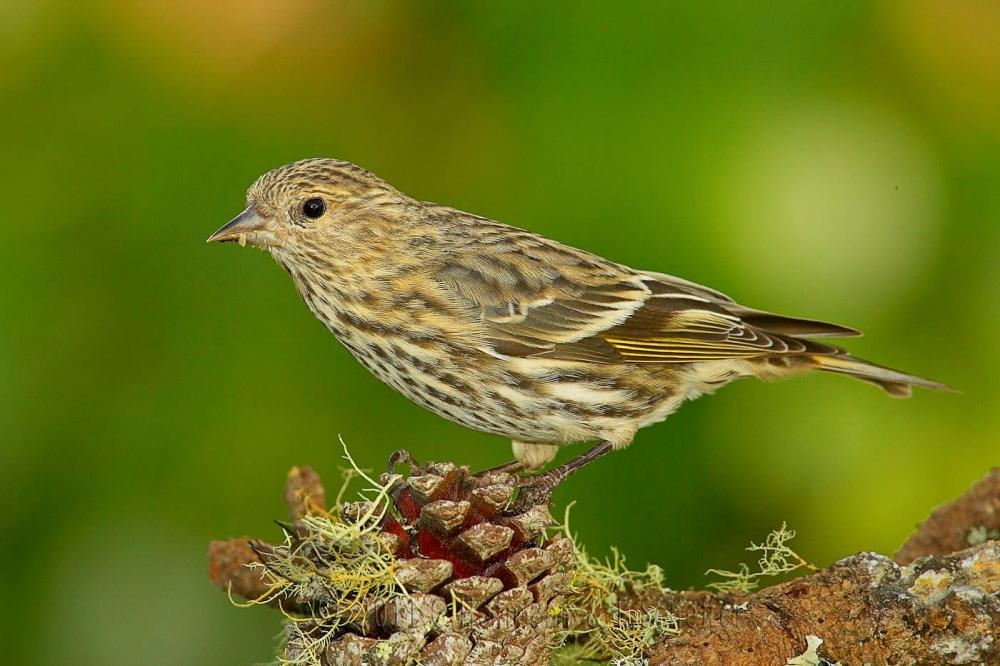
Pine siskins are migratory finches, known for their conspicuous streaks and slender bills which separate them from American sparrows and other similar sized finches. With an outstanding power to thrive in the winter, these North American birds often fly in groups.
Pine Snake

Pine snakes are heavily-built, non-venomous, colubrid snake found near Southeastern US. Although not poisonous, bites from a pine snake are sure to hurt.
Hick’s Yew

The Hick’s yew is a cultivar of the Anglojap yew, is a hybrid yew plant believed to be created by T.D. Hatfield, a Massachusetts based horticulturist. It is the result of the hybridization of the English yew and the Japanese Yew.
Bearded Vulture

Imagine a bird so fierce, it can crack bones with nothing more than its powerful beak. The Bearded Vulture is a living testament to the relentless drive of nature’s most efficient scavenger. Its razor-sharp talons and specialized diet—feasting on bones, not just meat—make it one of the most intriguing and formidable creatures on the planet. This bird doesn’t just survive; it reigns over the wild landscape, mastering an art of survival few other species can even dream of.
Boreal Owl

Boreal owls are small owls found throughout the Holarctic region. They are members of the typical owls group, as opposed to the barn owl grouping.
Dawn Redwood Tree: A Living Fossil with Remarkable Resilience and Ecological Value

Imagine standing before a towering tree, its reddish-brown bark standing in stark contrast to the vibrant green needles that reach toward the sky. Often called a “living fossil,” the Dawn Redwood Tree was once thought to be extinct. Rediscovered in 1941, this remarkable tree has since captivated the world with its speed, resilience, and ecological importance.
Kermode Bear

Kermode bears are a subspecies of the American black bear found in coastal British Columbia. They are named after Frank Kermode, a Royal B.C. Museum former director.
Japanese Plum Yew

The Japanese plum yew is a deer-resistant small tree belonging to the plum-yew family. Its scientific name is in honor of the Earl of Harrington, who was the first plant this tree in a Europe.
This unique tree has long been valued not only for its ornamental qualities, but also for its medicinal properties. The plant has even shown potential in traditional medicine as an aid in treating certain diseases, including leukemia.
Arctic Shrew

Arctic shrews can be found in the northern US and through most of Canada. Their populations are abundant through most of their range, thus negating the risk of extinction.
Abert’s Squirrel

Abert’s squirrels are found sporadically throughout the Rocky Mountains, from Arizona to Mexico. They are named in honor of Col. John James Abert, an American soldier, and naturalist.
American Wigeon

American wigeons are dabbling ducks found in the Americas. They belong to the same family as the gadwall, falcated teal, Chiloe wigeon, and Eurasian wigeon.
North American Beaver

North American beavers are the second largest rodents in the world (after the capybara) and the largest in North America. It is one of the two extant beaver species, the other being the Eurasian beaver. Neither of these two species is closely related to the mountain beaver, also found in North America.
Red Spruce

Red spruce trees inhabit eastern North America. Perhaps it’s most well-known use is its effectiveness as a tonewood, which makes it a perfect choice for making guitars and violins. The tree is, however, susceptible to windthrow and acid rain, both of which can damage it rather easily.
Black-tailed Deer

Black-tailed deer are a member of the mule deer family and found across the Pacific Northwest of North America.
Dusky Grouse

Dusky grouse is the second largest grouse in the US after the sage grouse. They have a wide distribution, and their population numbers are holding their own for the last few decades.

Red-Cockaded Woodpecker

Red-cockaded woodpeckers are birds found exclusively in pine forests, especially ones with an abundance of longleaf pines.

Himalayan Brown Bear

The Himalayan brown bear is a species of brown bear found in the Northern Himalayan mountain ranges. It is the largest carnivore in its habitat. Its population numbers have been on a constant downswing because of loss of habitat. Human persecution for their claws and fur is another important reason behind this bear’s falling numbers.
Loblolly Pine

Loblolly pine is second most widespread of trees in the United States, after the red maple. It is a fast growing conifer. One particular individual in Arkansas is over 300 years of age. The origin of its name is the combination of the two words lob and lolly; the former means bubbling porridge while lolly means any pot-boiled food like soup or broth.
Rock Ptarmigan

Rock ptarmigans (pronounced tar-mi-gun) are members of the grouse family inhabiting a vast area around the Arctic pole. They are considered a game bird and hunted by the human population for entertainment and food.
Himalayan Tahr

Essentially a wild goat, the Himalayan tahr is an ungulate found throughout the Himalayas and in places where it has been introduced. They are highly adapted to survive in the cold climates they inhabit.
English Yew

Originally known just as Yew, the English yew moniker started becoming commonplace when other trees of this genus were discovered. It is found across Europe and in parts of Asia and Africa as well. It is sometimes considered a shrub because of its average medium maximum size despite the columnar structure.
Yellow-Bellied Marmot

Yellow-bellied marmot is a species of small- to medium-sized rodents inhabiting the mountainous regions of southwestern Canada and the western United States, including Mount Rainier, Sierra Nevada, and the Rocky Mountains. Found at an elevation of about 6,500 ft, the marmots dig burrows in the ground where they live in colonies.
Jeffrey Pine

Jeffrey pine is a species of conifers found in North America at an altitude of 1,500 to 2,900 m. These pine trees, named after the Scottish botanist John Jeffrey, slightly resemble Ponderosa pine though they can be differentiated based on their needles, buds, cones, and bark.