

Pine Siskin
Pine siskins are migratory finches, known for their conspicuous streaks and slender bills which separate them from American sparrows and other similar sized finches. With an outstanding power to thrive in the winter, these North American birds often fly in groups.
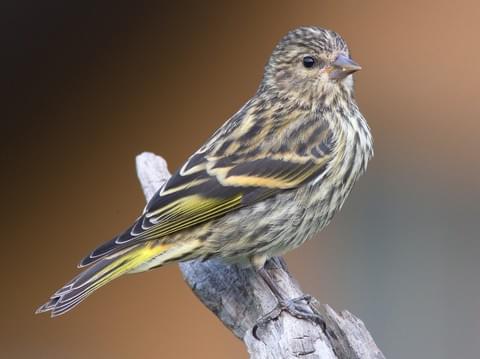
Pine Siskin
Scientific Classification
| Kingdom | Animalia |
| Phylum | Chordata |
| Clade | Tetrapodomorpha |
| Class | Aves |
| Order | Passeriformes |
| Family | Fringillidae |
| Subfamily | Carduelinae |
| Genus | Spinus |
| Scientific names | Spinus pinus |
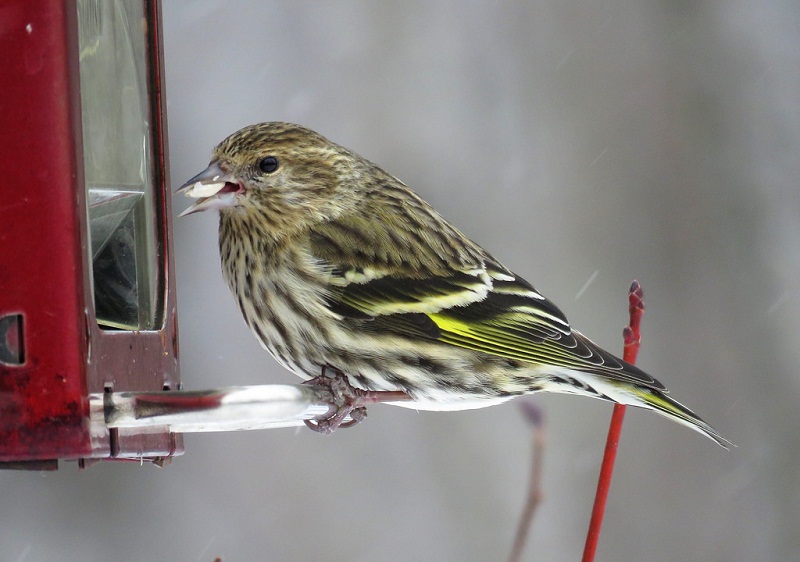
Picture of a Pine Siskin

Pine Siskin Bird
Quick Information
| Also Knows As | Tarin des pins (French), Jilguero de Los Pinos (Spanish) |
| Description | Size: 4.3–5.5 in (11-14 cm) lengthwise Wingspan: 7.1-9 in (18-22 cm) Weight: 0.4-0.6 oz ( 11-17 g) Color: Brown upperparts and paler underparts, heavy streaks throughout the body, yellow patches on the edge of the tail and wings, in some variations there are white spots along with white. The wing coloration is clearly visible during its flight or mating. |
| Subspecies |
|
| Distribution | Throughout Alaska, northern parts and the western mountains of United States of America, Canada |
| Habitat | Conifer forests like Taiga, deciduous forests having open canopies, suburban woodlands |
| Sounds & Communication | “zreeeeeeet”, flight call is a “psee” or “zwee”, “tit-a-tit”. Males emit a husky sound and they often sing while female sing to initiate the mating |
| Lifespan | 10-11 years |
| Diet | Spruce seeds, birch, red alter seeds, small insects |
| Adaptations |
|
| Predators | Hawks, red squirrels, and cats |
| IUCN Conservation Status | Least Concern |

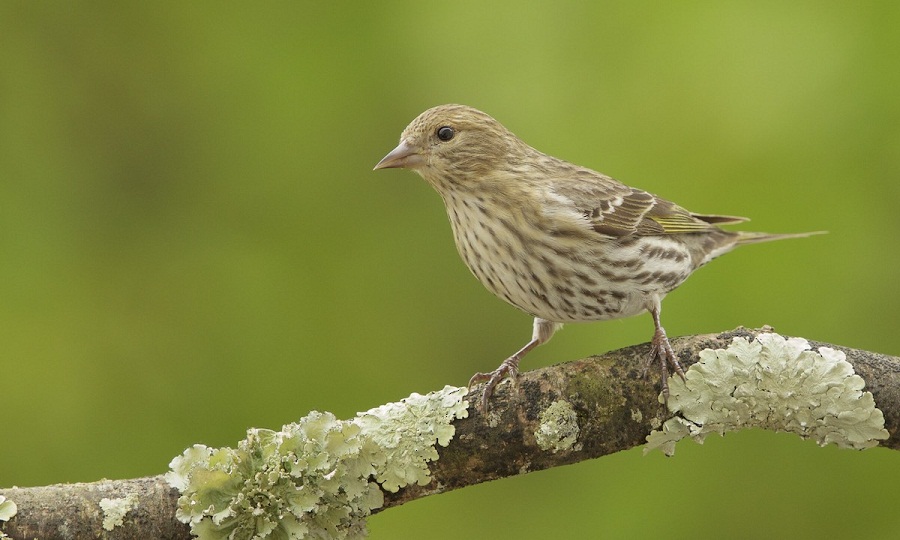
Pine Siskin Female
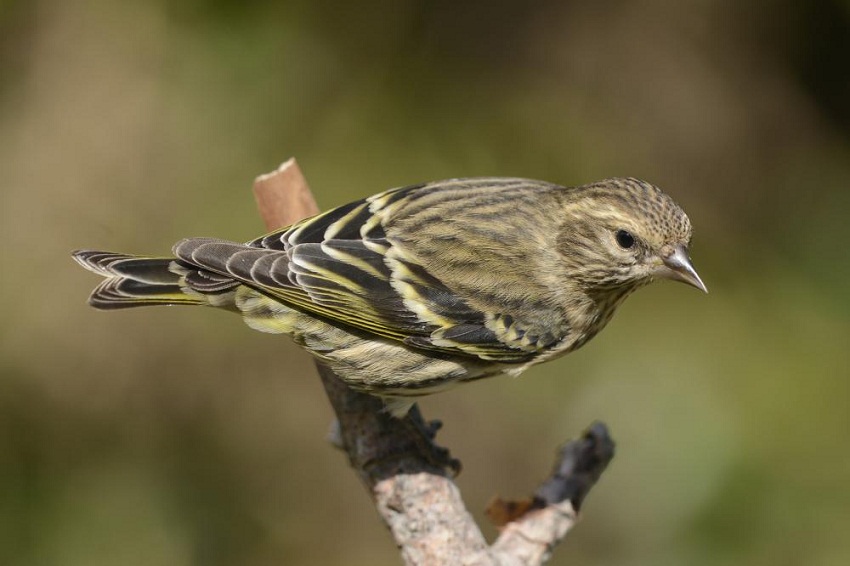
Pine Siskin Male
Behavior
- They migrate from one place to another in no particular pattern as their migration depends on the availability of the food.
- Pine siskins forage collectively with goldfinches.
- They can be aggressive and hostile with each other when there is a scarcity of food. In order to ward the other competitors off, they usually emit a threatening sound, spreading its wings along with the tail and lowering the head at the same time.
- To forage on a vast field, a group of pine siskins often builds up a temporary colony over the field.
- The female makes a hidden cup-shaped nest with twigs, rootlets, leaves and bark strips within 5-6 days. The nest is further insulated with fur, moss and other thick plants. The male often helps her building the nest by gathering potential materials.
- The male feeds the female during the brooding period.
- It hangs upside down while eating.
Pine Siskin Photos

Pine Siskin Baby
Mating and Reproduction
Pine siskins start courting in late winter when the male flies around in a circular motion above the female. Sometimes, the male feeds the female during the phase. The female lays 3-5 light greenish-blue, black or brown dotted eggs and incubates them for 13-14 days.
Life Cycle
After the hatching, both the male and female feed the hatchlings. After 14-15 days the young birds leave the nest.
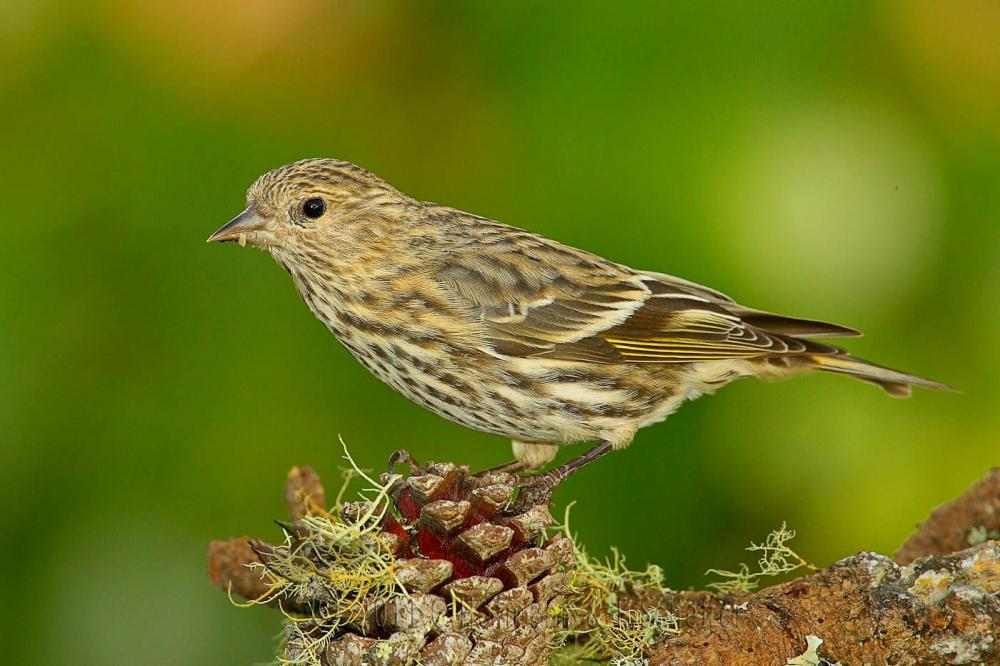
Pine Siskin Images
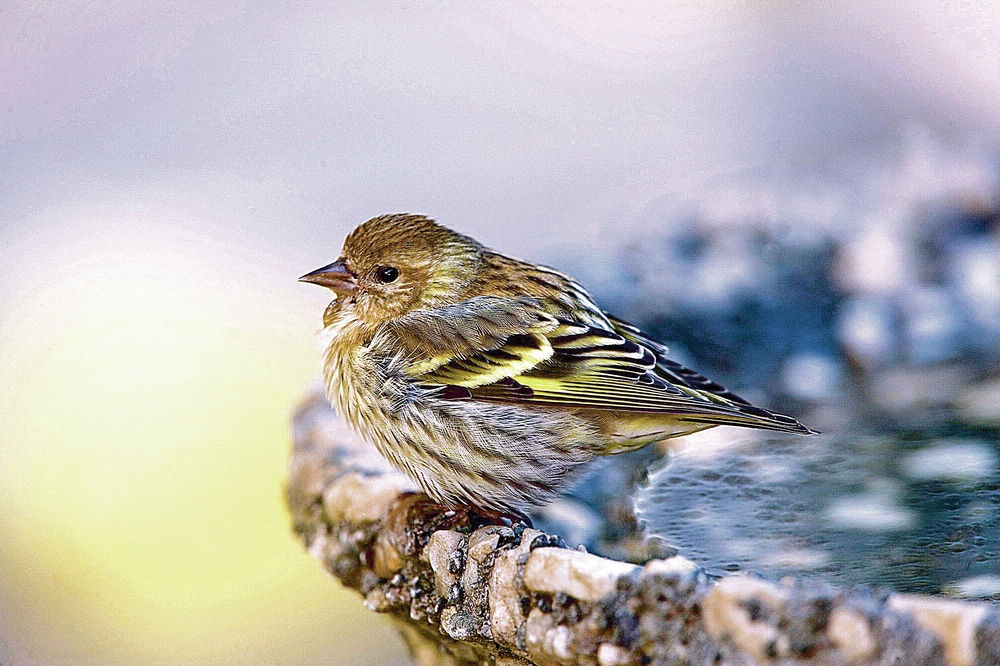
Pine Siskin Pictures
Interesting Facts
- The bird is known as an irruptive winter finch due to its migration.
- The oldest recorded siskin was 8 years and 8 months in 1966.
References
- https://www.allaboutbirds.org/guide/Pine_Siskin/overview
- https://sites.psu.edu/birdsofpa/birds-of-pennsylvania/pine-siskin/
- https://birdsoftheworld.org/bow/species/pinsis/cur/introduction
- https://www.allaboutbirds.org/guide/Pine_Siskin/lifehistory
- https://animalia.bio/pine-siskin
- https://feederwatch.org/learn/articles/tracking-pine-siskin-movements/
- https://www.audubon.org/field-guide/bird/pine-siskin
- https://www.tn.gov/twra/wildlife/birds/forest-birds/pine-siskin.html
Published on November 12th 2018 by Sahana Kanjilal under Coniferous Forest Animals.
Article was last reviewed on 17th July 2023.